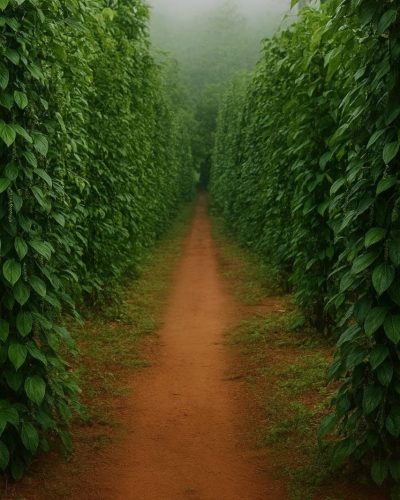
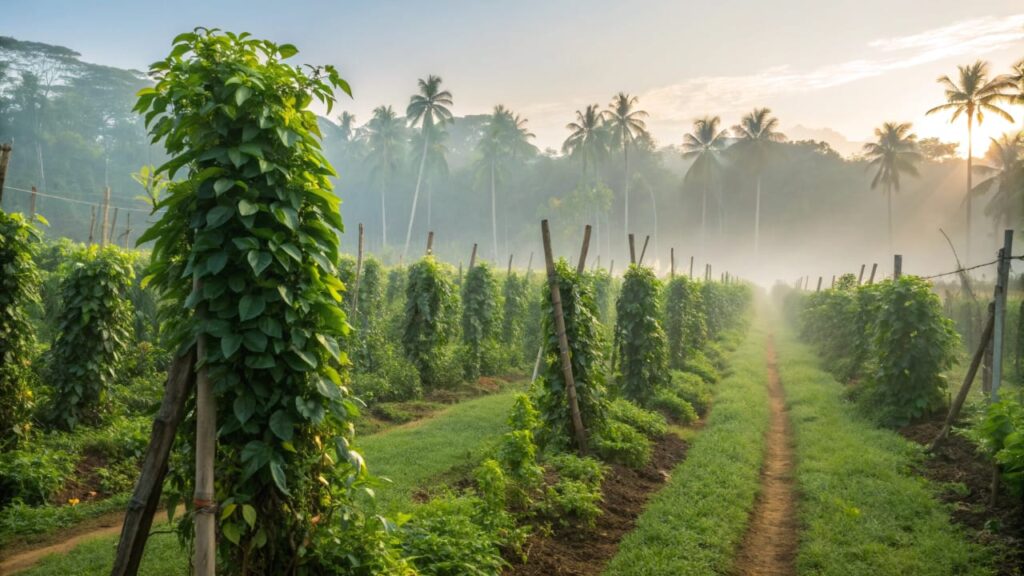
Black pepper thrives in warm, humid tropical climates with 23–32°C temperature and 2000–3000 mm annual rainfall. Ideal soil: well-drained loam or clay loam, rich in organic matter, pH 5.5–6.5.
Propagation Methods
Preferred method is vegetative propagation using rooted cuttings from disease-free mother plants. Cuttings with 2–3 nodes are rooted in a sand-soil-compost mix and transplanted after 45–60 days.
Trellis/Standard Selection and Planting
Use strong supports like Erythrina or Silver Oak. Space plants 3×3 m apart (≈1100 vines/ha). Plant near the standard for proper support, aeration, and uniform growth.
Cultivation and Management
Manuring and Fertilization
Apply 10 kg compost/vine/year plus 50 g N, 50 g P₂O₅, 150 g K₂O per vine in two splits (pre- and post-monsoon). Biofertilizers like Azospirillum enhance nutrient uptake.
Water Management
Maintain consistent soil moisture; irrigate every 10–15 days in dry months. Drip irrigation is ideal.
Pruning and Training
Prune after harvest to remove old and diseased shoots; train vines with coir ropes; maintain 2–3 main leaders.
Pest and Disease Management
Control pollu beetle, aphids, and scales using neem oil or integrated pest management (IPM). Manage diseases like Quick Wilt and Foot Rot with proper drainage and copper fungicides.
Cultivation and Management
Timing
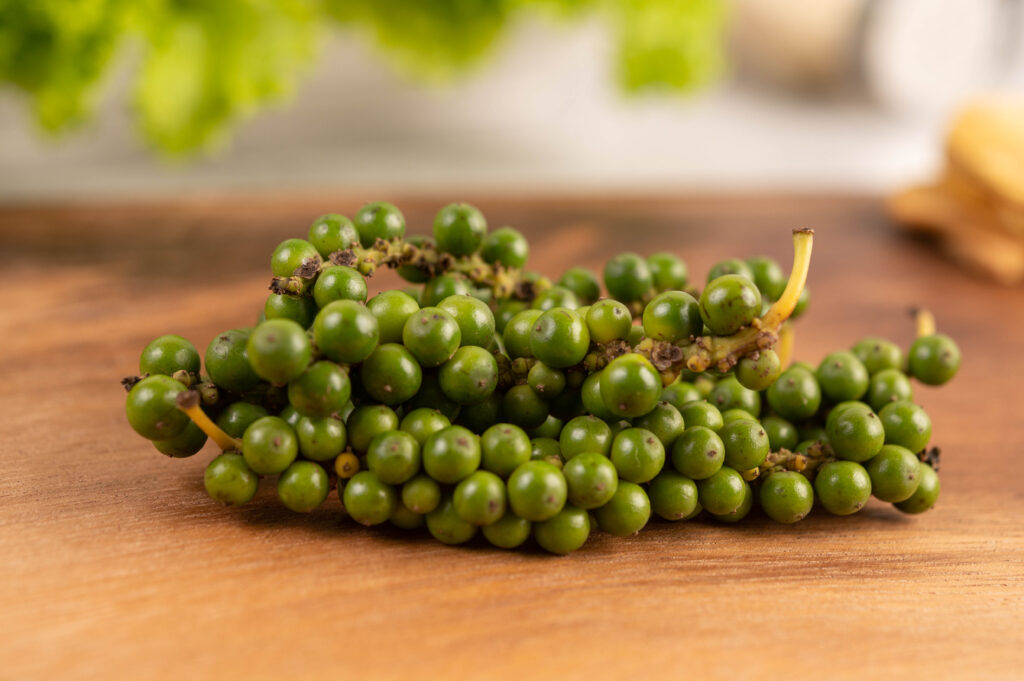
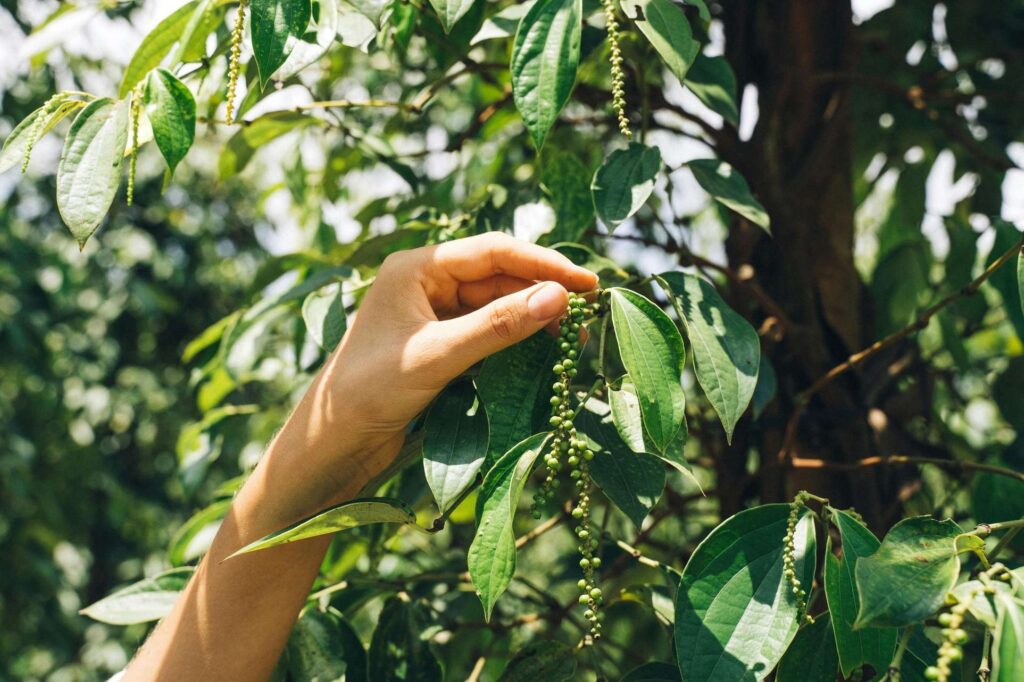
Harvest when berries turn yellowish-red but firm. For black pepper, harvest mature green berries before full ripeness.
Technique
Manual picking ensures minimal damage and uniform export quality.
Post-Harvest Processing
Threshing
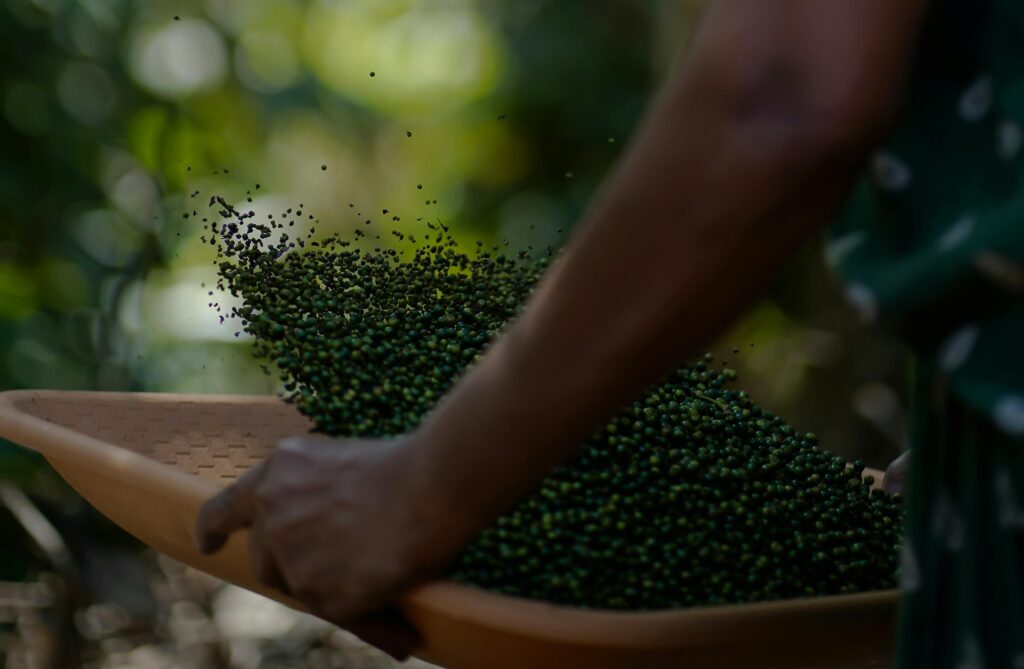
Separate berries from spikes manually or mechanically in clean surroundings.
Blanching
Dip fresh berries in hot water (80–90°C) for 1 minute to enhance color and aid drying.
Drying
Reduce moisture to 8–10%. Sun-dry for 3–5 days or use mechanical dryers at 50–55°C. Avoid soil contact.
Cleaning, Grading, and Sorting
Remove impurities; classify into garbled (cleaned) and ungarbled grades. Export-grade pepper is dark, heavy, and aromatic.